Low voltage rescue is one of those competencies that sits close to the line between routine compliance and a genuine life-saving skill. Most electrical and construction workers https://emilioosyu717.theglensecret.com/cpr-lvr-program-manual-uetdrmp018-and-hltaid009-in-one-face-to-face-session do not enrol in an LVR course because they want another certificate in the folder. They enrol because live electrical work, switchboards, panels, plant rooms, temporary power, and construction site services create situations where a fast, controlled response can make the difference between a near miss and a fatality.
For workers around energised low voltage equipment, the relevant nationally recognised unit is UETDRMP018, formally titled “Perform rescue from a live low voltage panel”. This is the current unit and it supersedes and is equivalent to UETDRMP007. Many people in the industry still use older language such as UETDRRF004, UETDRMP007, LVR training, CPR LVR, or low voltage rescue training. In practical terms, if you are booking current training, UETDRMP018 is the unit name to look for.
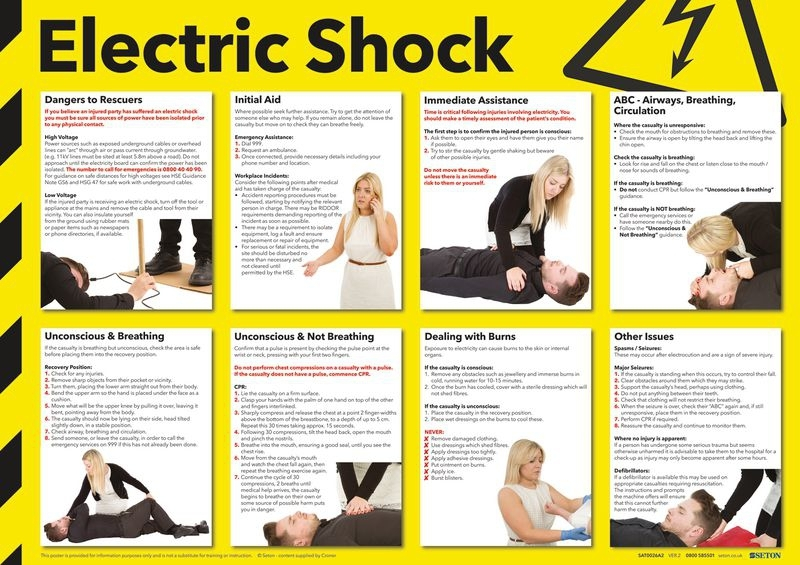
A common course format combines UETDRMP018 with HLTAID009 Provide cardiopulmonary resuscitation. First Aid Pro’s CPR LVR course follows this structure, combining low voltage rescue with CPR in a face-to-face session. That pairing matters. Rescue from a live low voltage panel is not simply about getting a person away from the source. Once the person is clear, the rescuer may need to assess breathing and provide CPR until further help arrives. On a worksite, those first minutes are often handled by the people already there, not by emergency services.
What low voltage rescue training is actually about
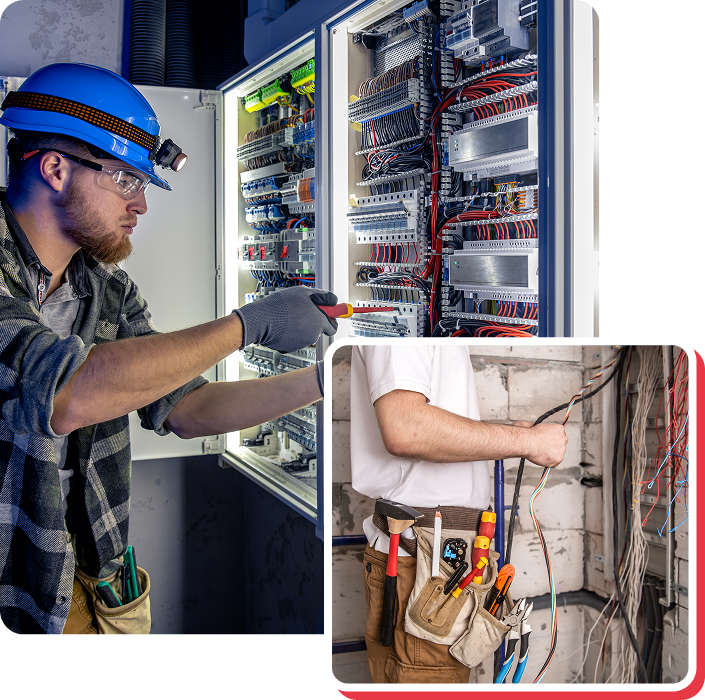
Low voltage rescue training prepares a worker to respond when someone is in contact with, or affected by, a live low voltage panel. The phrase can sound narrow, but the circumstances around it are anything but casual. Electrical incidents rarely unfold neatly. A worker may be found slumped near a panel. A colleague may be unable to let go. The area may be cramped, noisy, poorly lit, or part of a larger job where several trades are moving through at once.
The central principle is that the rescuer must not become the second casualty. Anyone who has spent time around construction switchboards or plant rooms knows the instinct to rush in can be strong, especially if the person on the ground is a mate or apprentice. LVR training reinforces a disciplined sequence: assess the situation, avoid direct contact with the live source, make the area safe as far as the responder is trained and able to do, perform the rescue method taught in the course, then move into casualty care including CPR where required.
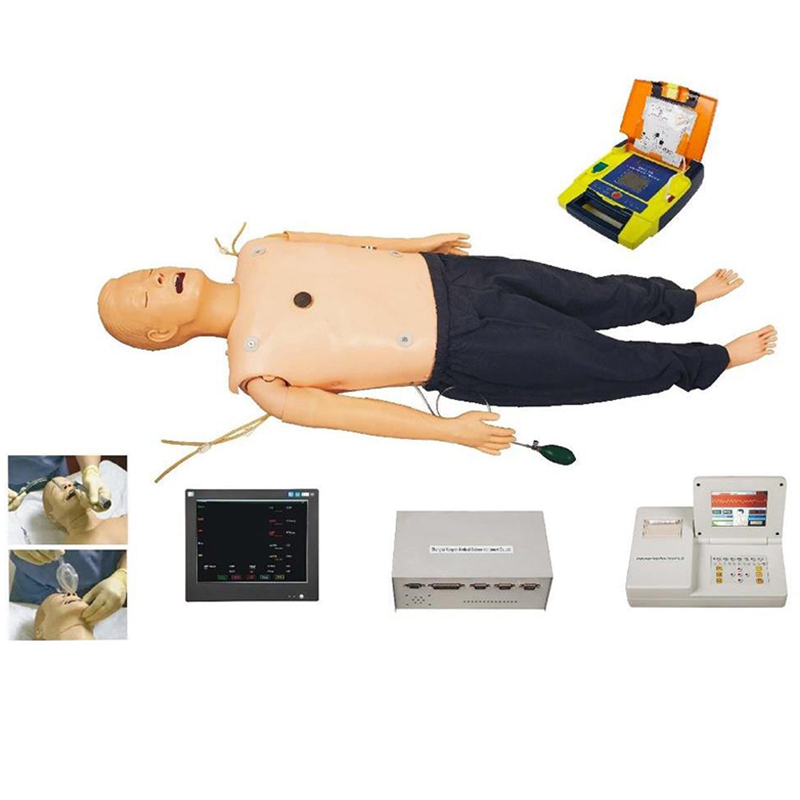
That is why the combination of lvr cpr training is common. A rescue without post-rescue care is incomplete. In a serious electrical incident, the person may need immediate CPR. The CPR component, HLTAID009, includes assessment evidence that a learner can perform at least two minutes of uninterrupted CPR on an adult manikin placed on the floor. That floor-based requirement is not a minor administrative detail. It reflects the reality that CPR is physically demanding, awkward, and done at ground level in most real incidents.
For some learners, that requirement is the hardest part of the course. Kneeling, maintaining hand position, keeping compression depth and rhythm, and continuing without interruption for two minutes takes effort. Workers with knee problems, back injuries, or mobility limitations should think about this before booking, not after arriving. A credible CPR LVR course has to assess the physical skill, not just discuss it.
Who needs a CPR LVR course
The workers most commonly associated with low voltage rescue training are electricians and electrical workers, but they are not the only people who benefit from it. First Aid Pro identifies the course as aimed at electricians, electrical workers, workplace safety officers, builders, construction workers, mining professionals, and energy personnel. That range makes sense. Electrical risk does not stop at the electrical trade boundary.
A builder may not be terminating conductors, but may be supervising a site where temporary power is used daily. A safety officer may need lvr and cpr to understand the practical response expected of the team. A construction worker may be operating near panels or temporary distribution boards. In mining and energy environments, electrical infrastructure is often central to the job and sometimes located in demanding physical conditions.
There is also a cultural element. On better-run sites, LVR and CPR are not treated as box-ticking exercises for electrical workers alone. Supervisors want to know who is current, who can respond, and whether coverage is adequate for the work being done. If the only person with current CPR LVR training is absent, working at another location, or tied up in a different part of the site, the paper compliance may look better than the practical readiness.
The decision about who should attend should be based on exposure, role, and site arrangements. A company with several workers regularly opening panels or working near energised electrical equipment may train a broader group than the minimum expected. A small subcontractor may focus on the licensed worker and one or two supporting staff. A principal contractor may want safety personnel trained so they understand what good emergency readiness looks like on site.
Current unit names and older terminology
Training unit names change over time, which is why the low voltage rescue space can be confusing. Workers may have old cards or certificates showing UETDRRF004 or UETDRMP007. Supervisors may use the phrase “LVR ticket” and not remember the unit code. Booking systems may use CPR LVR as the course title while the statement of attainment lists the formal units.
The current nationally recognised low voltage rescue unit is UETDRMP018, “Perform rescue from a live low voltage panel”. It supersedes and is equivalent to UETDRMP007. The older UETDRRF004 and UETDRMP007 wording is still familiar in industry conversation, but current training should reference UETDRMP018.
For CPR, the relevant unit in this combined training format is HLTAID009 Provide cardiopulmonary resuscitation. When these are delivered together, the course may be described as a CPR LVR course, lvr cpr course, cpr lvr training, or low voltage rescue course. The wording varies, but the important check is whether the course includes both UETDRMP018 and HLTAID009 if your workplace requires the combined outcome.
A useful habit is to read the course page and certificate details carefully before enrolling. The course title alone is not enough. “LVR course” could refer to the low voltage rescue component, while “CPR LVR” generally signals the combined CPR and LVR structure. If the training is for compliance, site access, contractor prequalification, or employer records, the unit codes matter.
What the First Aid Pro CPR LVR course includes
First Aid Pro’s CPR LVR course combines UETDRMP018 with HLTAID009 Provide CPR. It is delivered face to face, with no online pre-learning. The public course duration shown is four hours.
A four-hour face-to-face format suits this type of training because the skills are physical and scenario-based. Learners need to practise and demonstrate techniques rather than simply read about them. A worker can understand the theory of rescue and CPR but still struggle when asked to perform on the floor, maintain composure, and complete the required assessment.
The absence of online pre-learning is also worth noting. Some people prefer blended courses because they can complete theory at home. Others prefer a fully face-to-face format because it keeps the session contained and gives the trainer more direct contact with the group. For a busy electrical contractor, a no pre-learning model can reduce the risk of workers arriving incomplete and being unable to finish the course. The trade-off is that the face-to-face block needs to cover everything required within the scheduled session.
The course is not described as a general electrical licensing program. It is focused on rescue from a live low voltage panel and CPR. That distinction matters for newer workers. LVR training does not make someone competent to perform electrical work outside their licence, role, or supervision arrangements. It is emergency response training for a defined type of incident.
Course duration, delivery and assessment realities
A public CPR LVR course duration of four hours is short enough to fit into a workday, but it still requires attention and physical participation. People sometimes underestimate compact safety courses because they compare them with longer trade training. The better comparison is not hours spent in a classroom. It is whether the participant can demonstrate the required emergency response skills to the expected standard.
HLTAID009 CPR assessment includes at least two minutes of uninterrupted CPR on an adult manikin placed on the floor. That is a clear performance requirement. If someone cannot kneel, lean over the manikin, and sustain compressions, they may have difficulty completing the CPR component. This can be confronting for older workers or those returning after injury, but it is better addressed honestly. In an emergency, CPR has to be delivered physically, not theoretically.
Face-to-face low voltage rescue training also gives learners a chance to work through practical decision-making. A trainer can observe whether someone rushes, skips scene assessment, or becomes fixated on the casualty without considering ongoing electrical danger. Those habits are easier to correct in person than through online slides.
There is another benefit to training in a room with other tradespeople: the discussion tends to be grounded. Someone will ask about cramped switchrooms. Someone else will raise temporary boards. A safety officer may ask how to record training currency across multiple sites. These questions make the session more useful, especially when the trainer keeps the discussion within the scope of the course and avoids drifting into unsupported site-specific advice.
Certificate timing and validity
First Aid Pro states that certificates are issued same day and are valid for 12 months. It also recommends regular or annual refreshers.
For employers, same-day certificate issue can be important. Site access or rostered work may depend on evidence of training. If a worker completes the course in the morning and needs to update records quickly, same-day issue reduces administrative lag. That said, companies should still plan ahead rather than rely on last-minute bookings. A missed course, illness, or full class can leave a worker out of currency at an awkward time.
The 12-month validity period aligns with the nature of these skills. CPR and rescue response degrade when they are not practised. Even experienced workers can lose sharpness in hand placement, compression rhythm, and emergency sequence if they only revisit the material every few years. Annual refresher training keeps the actions familiar and gives workers a structured prompt to think about changes in their job, workplace, or physical capacity.
There is a psychological benefit too. Workers who refresh regularly are less likely to freeze because the sequence feels known. That does not mean an incident becomes easy. Electrical emergencies are stressful. But rehearsed skills give people something reliable to fall back on when adrenaline rises.
Public course locations and workplace training options
First Aid Pro lists public CPR LVR training venues in several locations. Verified venue examples include Level 8/117 Queen Street, Brisbane QLD 4000; Unit 9/84 Wembley Rd, Logan Central QLD 4114; Level 15, Suite 1501/370 Pitt Street, Sydney NSW 2000; Level 2, 50 King William Street, Adelaide SA 5000; and 393 Argyle Street, North Hobart TAS 7002 at Rydges Hobart, with access via 15 Lewis Street.
For individual workers, a public course is often the simplest path. Book a date, attend the venue, complete the training, and receive the certificate if assessed competent. Public sessions also suit contractors who need to renew one or two workers at a time rather than coordinate a full crew.
For employers, onsite workplace CPR/LVR training can be more efficient. First Aid Pro states it can deliver onsite workplace CPR/LVR training for groups of 5 to 24 participants, with flexible scheduling. Its corporate training information also refers to workplace and group delivery Australia-wide. The practical advantage is obvious: workers stay close to the job, travel time drops, and the training can be scheduled around shifts or project demands.
There are trade-offs. Public courses give individuals more date and location options. Onsite training requires enough participants and coordination. A company also needs to make sure the space is suitable for practical CPR assessment, since CPR must be performed on a manikin on the floor. A cramped lunchroom with poor floor space may make the session harder than necessary. When a business books onsite lvr cpr training, it should think about the room, parking, worker availability, and whether supervisors will protect the session from interruptions.
Price expectations
First Aid Pro’s pages indicate a public price of $99 for the CPR LVR course, with some pages showing limited-time discount pricing on selected dates. Pricing should always be checked at booking because advertised discounts can change and may apply only to selected sessions.
For employers, the visible course fee is only part of the cost. There is also worker time, travel, parking where relevant, and the administrative work of recording certificates. Onsite training may reduce some of those indirect costs for groups, particularly when five or more workers need training at once. Public courses may still be better value when only one worker needs renewal or when timing is urgent.
The cheapest option is not always the best fit if it creates scheduling problems. A $99 public course that requires a worker to lose half a day in travel may cost more in practice than a coordinated workplace session. Equally, an onsite booking for a group that keeps getting postponed because the site is busy can leave people out of currency. The right choice depends on workforce size, roster stability, and how close expiry dates are.
Quick facts worth checking before booking
The key course facts are straightforward, but they are worth confirming before payment because employers and sites can have specific evidence requirements.
- Current LVR unit: UETDRMP018, “Perform rescue from a live low voltage panel”. CPR unit in the combined course: HLTAID009 Provide cardiopulmonary resuscitation. First Aid Pro delivery format: face to face, no online pre-learning. Public course duration: four hours. Certificate validity stated by First Aid Pro: 12 months, with annual refreshers recommended.
Those points cover the core booking questions. If a supervisor asks for a “low voltage rescue ticket”, the safest response is to confirm the exact units required. If they need CPR LVR, the combined UETDRMP018 and HLTAID009 course is the relevant structure based on the First Aid Pro course information.
What learners should expect on the day
Workers should arrive ready to participate, not merely observe. The CPR component involves floor work and sustained compressions. Clothing should allow kneeling and movement. If someone attends after a night shift or at the end of a physically heavy day, fatigue can make the practical assessment more difficult. That is not always avoidable in construction and electrical work, but it is worth considering when choosing a session.
A typical participant mix may include licensed electricians, apprentices, construction workers, safety staff, and people from energy or mining environments. The best sessions use that mix well. Electricians often bring practical knowledge of panels and site conditions. Safety officers bring questions about procedures and record keeping. Builders and construction workers bring the broader site perspective, including how emergency response has to work when multiple trades are nearby.
The course should not be treated as a substitute for site-specific induction. A worker may complete low voltage rescue training at a public venue and still need to understand the actual emergency arrangements at their workplace. Where is the switchboard? Who calls emergency services? Who meets responders at the gate? How are isolations managed? Who has current CPR LVR training on the shift? These details sit outside the basic certificate, but they shape the real response.
Why annual CPR LVR refreshers make practical sense
Annual refresher training is sometimes viewed as an inconvenience, especially by experienced electrical workers who have been through several versions of LVR training over the years. That reaction is understandable. People are busy, sites are under pressure, and repeating familiar material can feel inefficient.
The practical argument for annual refreshers is skill retention. CPR is a physical skill. Low voltage rescue response is a sequence under pressure. Both fade without rehearsal. Even a worker who remembers the broad principles may hesitate over the exact order of actions when faced with a collapsed person near a panel. Refreshers reduce that hesitation.
There is also value in keeping terminology current. A worker trained years ago under UETDRRF004 or UETDRMP007 may not know that UETDRMP018 is now the current nationally recognised unit. Annual renewal helps prevent record confusion, especially for companies with subcontractors moving between clients and sites.
For employers, annual scheduling is cleaner than ad hoc catch-up. If CPR LVR certificates are valid for 12 months, a register can be reviewed monthly or quarterly. Workers can be booked before expiry rather than after a site access issue arises. Larger contractors often learn this the hard way when several certificates expire at once and the next suitable course date is already full.
Choosing between public and onsite training
The choice between public and onsite training should be made on operational grounds, not habit. A sole trader or small contractor may prefer a public class because it is fast and simple. A construction company with a group of workers nearing expiry may prefer onsite delivery. A mining or energy employer may need flexible scheduling to suit rosters.
Public courses work well when the worker can travel easily to a listed venue and the available dates match the expiry window. They also suit people who need individual certification for employment, contract work, or site requirements. Onsite courses work well when a business has a group of 5 to 24 participants and wants to reduce travel, coordinate records, and train staff together.
There is a teamwork advantage to onsite training. Workers who train together often discuss how the response would work in their own workplace. That can expose gaps. For example, a team may realise that several people know how to respond, but only one person knows where certain equipment is kept. Or they may realise that their emergency plan assumes a supervisor is present, even though after-hours work is common. These conversations are useful, provided they lead to practical follow-up rather than staying as training-room talk.
Practical booking checklist for supervisors
A short checklist can prevent most of the common booking mistakes and certificate problems.
- Confirm whether the site or employer requires both UETDRMP018 and HLTAID009. Check the worker can meet the physical CPR requirement, including floor-based CPR. Book before the 12-month certificate validity expires. Choose public training for individuals or onsite training for suitable groups of 5 to 24. Keep a central record of certificate issue dates and renewal due dates.
This is basic administration, but it matters. A worker with expired CPR LVR training may be prevented from starting work, and a crew without enough current responders may not meet the expectations set for the task. Good record keeping is cheaper than downtime.
Common misunderstandings about LVR training
One common misunderstanding is that low voltage rescue training is only for electricians. Electricians are a key audience, but the course is also aimed at electrical workers, safety officers, builders, construction workers, mining professionals, and energy personnel. The better question is not “what is the person’s job title?” but “what is their exposure to the risk and their expected role in an emergency?”
Another misunderstanding is that CPR can be handled separately later. In some training pathways, workers do complete CPR and LVR at different times. But when a workplace asks for CPR LVR, it usually wants evidence that the worker has both rescue and CPR capability. First Aid Pro’s combined course addresses that by including UETDRMP018 and HLTAID009 together.
A third misunderstanding is that older unit codes are interchangeable in conversation and therefore unimportant. In casual speech, people may use old names and still mean the current course. For records, prequalification, and audit purposes, the exact unit matters. UETDRMP018 is the current unit and supersedes and is equivalent to UETDRMP007. Workers with older certificates should check their currency and what their employer or site now requires.
A fourth misunderstanding is that a short course cannot be demanding. Four hours may not sound like much, but the assessment includes practical CPR performance. People who arrive unprepared for floor work, or who assume attendance alone is enough, can be caught out. Competence has to be demonstrated.
How this training fits into electrical safety culture
Low voltage rescue training should sit inside a wider safety culture, not replace it. The primary goal is always to prevent electrical contact in the first place. Safe systems of work, competent supervision, appropriate isolation, clear communication, and adherence to workplace procedures remain central. LVR training exists because controls can fail, conditions can change, and emergencies still happen.
On construction sites, the environment shifts constantly. Temporary power is moved. Access routes change. Trades overlap. Weather affects conditions. People work under time pressure. These factors make emergency readiness more important, not less. A current cpr lvr certificate does not guarantee a perfect response, but it improves the odds that someone nearby has practised the actions needed.
In electrical businesses, LVR and CPR currency also sends a message to apprentices and younger workers. When senior tradespeople take refreshers seriously, the standard becomes normal. When training is dismissed as a nuisance, the attitude spreads. Safety culture is built through repeated signals, and training attendance is one of them.
Final thoughts for workers and employers
For electrical and construction workers, the essential facts are clear. The current low voltage rescue unit is UETDRMP018, “Perform rescue from a live low voltage panel”. A CPR LVR course commonly pairs it with HLTAID009 Provide CPR. First Aid Pro’s course is face to face, has no online pre-learning, runs for four hours in its public format, and states same-day certificates valid for 12 months. Public pricing is indicated at $99, with some selected-date discounts shown on certain pages.
For individuals, the main task is to book the right course, arrive ready for practical participation, and keep the certificate current. For employers, the bigger task is planning. Know who needs lvr training, track expiry dates, choose public or onsite delivery sensibly, and make sure training records match the actual unit requirements.
Low voltage rescue is not abstract training. It is designed for a specific, high-risk moment that no one wants to face but every prepared worksite must be ready for. When the course is treated with that seriousness, it becomes more than a compliance item. It becomes part of the practical safety net around electrical and construction work.